Blog

  • Latency is Money: How AI, Cloud Infrastructure, and Cybersecurity Are Reshaping Algorithmic Trading in 2026

    Introduction: The Invisible Engine Behind Every Trade

    Every second, billions of dollars change hands across global financial markets — stock exchanges, crypto platforms, forex networks, and commodity markets all firing simultaneously. To the casual observer, trading looks like numbers on a screen. But beneath the surface, a different race is being run.

    The real competition in modern trading is not between human analysts reading charts. It is between algorithms. Between servers. Between microseconds.

    Today’s most profitable trading operations are powered by artificial intelligence, hosted on hyper-optimized cloud infrastructure, and protected by enterprise-grade cybersecurity systems. The firms that get this technology stack right do not just trade better — they trade at a level that human-only operations simply cannot compete with.

    This is the anatomy of modern algorithmic trading. And it is as much a software engineering story as it is a finance one.


    Section 1: The Rise of AI-Powered Trading Bots and Algorithmic Execution

    From Rules to Intelligence

    Early algorithmic trading systems were rule-based: “if asset X drops below price Y, execute trade Z.” Effective for their time, but rigid. Today’s AI trading systems are an entirely different animal.

    Modern trading algorithms are built on machine learning models — specifically deep learning, reinforcement learning, and natural language processing (NLP) — that do not just follow rules. They learn, adapt, and evolve in response to real-time market conditions.

    • Reinforcement learning models train trading agents to maximize profit over thousands of simulated market scenarios before ever touching real capital.
    • NLP engines scan financial news, earnings reports, social media sentiment, and regulatory filings in milliseconds, converting unstructured text into quantifiable trading signals.
    • Pattern recognition models identify statistical anomalies and micro-trends across thousands of asset pairs simultaneously — far beyond any human analyst’s capacity.

    Execution Speed: Where Milliseconds Become Millions

    Speed is not just an advantage in algorithmic trading — it is the product. High-frequency trading (HFT) firms execute thousands of trades per second, each designed to capture tiny price inefficiencies that exist for fractions of a second.

    A well-engineered AI trading system needs:

    • Co-location — physically hosting servers inside or adjacent to exchange data centers to minimize transmission distance.
    • Optimized execution engines written in low-level languages (like C++ or Rust) for maximum processing throughput.
    • Parallel processing pipelines that handle data ingestion, signal generation, risk checks, and order execution simultaneously.

    For context: a single millisecond of additional latency in an HFT system can translate to tens of thousands of dollars in missed opportunity during high-volatility market events. The gap between winning and losing trades is often measured in nanoseconds.


    Section 2: Cloud Infrastructure — The Backbone of Modern Trading Platforms

    Why the Cloud Changed Everything

    A decade ago, trading infrastructure meant racks of physical servers in premium data centers — expensive to build, expensive to scale, and impossible to spin up quickly. Cloud computing fundamentally changed the economics of this equation.

    Today, platforms like AWS, Google Cloud, and Azure offer trading firms:

    • Sub-millisecond inter-region latency through purpose-built financial services zones and dedicated network routing.
    • Elastic compute scaling that can handle a 10x spike in order volume during market open or a flash crash without degradation.
    • Global distribution to simultaneously serve trading systems across New York, London, Singapore, and Dubai with consistent performance.

    The Latency Equation

    In high-frequency trading, the speed of light itself becomes a constraint. A signal traveling between New York and Chicago takes approximately 13 milliseconds at the speed of light through fiber — which is why HFT firms have famously paid millions to lay straighter fiber-optic cables that shave fractions of milliseconds off transmission time.

    For trading platforms built on cloud infrastructure, the key architectural decisions include:

    • Edge computing deployments that move processing closer to exchange matching engines.
    • FPGA (Field-Programmable Gate Array) acceleration for order processing at the hardware level, bypassing traditional CPU bottlenecks.
    • In-memory databases (like Redis or Apache Ignite) for real-time market data storage — because hitting a disk-based database at HFT speeds is simply not an option.
    • Kubernetes-orchestrated microservices that isolate individual trading functions (data feeds, risk management, order routing) for maximum fault tolerance and independent scaling.

    A trading platform architecture is arguably one of the most demanding software engineering challenges in enterprise technology — every layer of the stack must be optimized to an extreme degree that most applications never require.


    Section 3: Protecting the Vault — Cybersecurity in Modern Trading

    Why FinTech Is a High-Value Target

    Financial platforms are the most lucrative and most attacked targets in the digital economy. According to industry reports, the financial sector consistently experiences some of the highest average data breach costs globally — and trading platforms carry unique risks that standard enterprise security models are not designed to address.

    The Threat Landscape Specific to Trading Platforms

    1. DDoS Attacks on Market Infrastructure

    A well-timed Distributed Denial of Service (DDoS) attack during high-volatility periods — a central bank rate announcement, an earnings release, a geopolitical event — can render a trading platform inaccessible precisely when its clients need it most.

    Attackers know this. Sophisticated DDoS attacks on financial platforms are increasingly designed to cause maximum financial and reputational damage. Effective mitigation requires always-on DDoS protection with sub-second traffic scrubbing, not solutions that activate only after an attack is already underway.

    2. API Security: The Front Door of Algorithmic Trading

    Modern trading systems are API-first. Trading bots, portfolio management platforms, and third-party analytics tools all communicate with exchange and brokerage infrastructure through APIs — and each of those endpoints is a potential attack vector.

    Common vulnerabilities in trading APIs include:

    • Broken authentication — improperly implemented OAuth flows that allow session hijacking.
    • Excessive data exposure — APIs returning more account information than necessary, creating data leakage risks.
    • Rate limiting failures — no throttling on order submission endpoints, enabling order-stuffing attacks that manipulate market conditions.
    • Unsecured WebSocket connections — real-time market data feeds transmitted without proper encryption or authentication.

    Securing trading APIs requires rigorous penetration testing, cryptographic API key management, strict rate limiting, and comprehensive logging of all API activity.

    3. Insider Threats and Access Control

    Trading firms handle extraordinarily sensitive data: algorithmic strategies, client portfolios, position data, and financial transaction records. Insider threats — whether malicious or accidental — represent a significant risk that perimeter security cannot address.

    Zero Trust architecture — where every user, system, and request is verified regardless of network location — is increasingly the standard for serious financial platforms. Combined with least-privilege access controls, comprehensive audit logging, and behavioral anomaly detection, it significantly reduces the blast radius of any internal breach.

    4. Secure Coding Practices for FinTech Applications

    The foundation of a secure trading platform is secure code. Vulnerabilities introduced at the development stage — SQL injection risks, insecure deserialization, hardcoded credentials, unpatched dependencies — create weaknesses that no amount of perimeter security can reliably compensate for.

    Secure software development for FinTech requires:

    • SAST and DAST tooling integrated into CI/CD pipelines for automated vulnerability detection.
    • Dependency vulnerability scanning to identify risks in third-party libraries.
    • Regular penetration testing of trading application APIs, authentication flows, and data handling logic.
    • Security-focused code reviews as part of the standard engineering process.

    Conclusion: The Competitive Edge Is Technical

    The future of trading is already here — and it is written in code.

    Firms that invest in AI-driven execution systems, cloud-native architecture optimized for low latency, and enterprise-grade cybersecurity are not just building better technology. They are building a structural competitive advantage that compounds over time. The gap between firms that take this seriously and those that do not will only widen as AI models become more sophisticated, markets more automated, and cyber threats more targeted.

    Whether you are building a new trading platform, scaling an existing FinTech product, or securing financial infrastructure that cannot afford to go down — the technical decisions you make today will define your position in tomorrow’s market.

    At TechShield, we build and secure the software that powers serious FinTech operations.

    From custom trading platform development and cloud architecture design to security audits, API penetration testing, and DDoS protection — our engineering and security teams have the expertise to build what modern financial technology demands.

    TechShield — Engineering & Cybersecurity for the Global Market.

  • The Future of Web & Mobile Apps: Why AI Bot & Agent Integration is a Game-Changer for Businesses in 2026

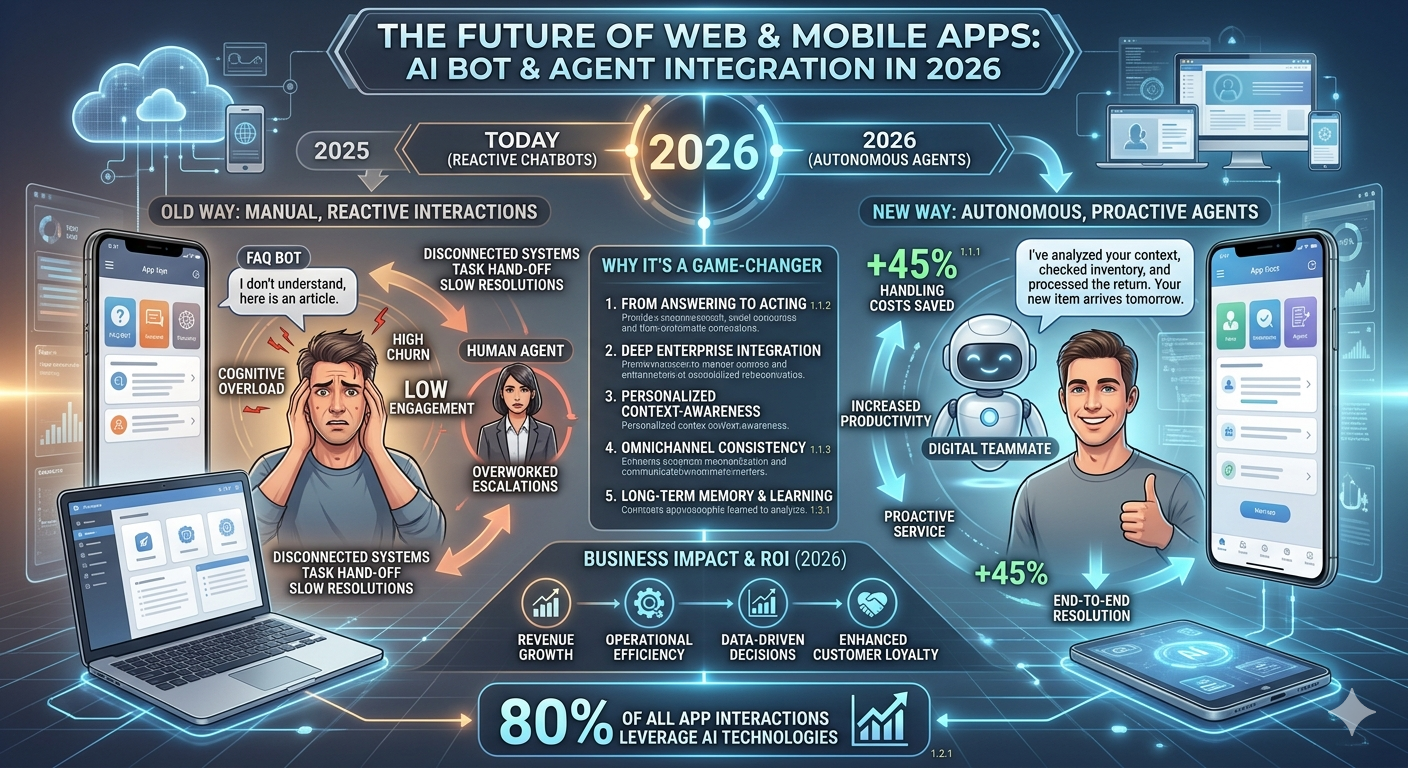
    The Future of Web & Mobile Apps: Why AI Bot & Agent Integration is a Game-Changer for Businesses in 2026


    Your competitor just launched an app that answers customer questions at 2 AM, qualifies sales leads without a single human touchpoint, and personalizes every user’s experience based on their behavior in real time.

    Your app shows a contact form and a phone number.

    This isn’t a minor product gap. It’s the difference between a business that scales and one that stagnates. In 2026, the divide between static digital products and AI-powered applications has become impossible to ignore — and the businesses closing that gap fastest are pulling ahead in ways that are very difficult to reverse.

    This article breaks down exactly what that shift looks like technically, what it means for your product, and how businesses investing in custom AI bot integration right now are building a structural advantage over everyone else still running conventional apps.


    Section 1: Custom Web & Mobile App Development in 2026 — Static Is No Longer Enough

    There was a time when having a clean, responsive website or a well-designed mobile app was a genuine competitive edge. Those days are gone.

    Today, a static app — one that displays content, takes form submissions, and waits for a human to act — is table stakes at best. Users expect more. They expect the application to anticipate what they need, respond instantly, and adapt to how they personally use the product. When it doesn’t, they leave. The average mobile session lasts under three minutes, and users make the decision to abandon within the first thirty seconds of friction.

    Generic no-code and low-code platforms can produce a working app, but they produce the same working app that hundreds of other businesses in your space are running. The visual differences are cosmetic. The underlying functionality is identical. There is no proprietary logic, no custom automation, and no intelligence baked into the product.

    Why Custom Engineering Is the Only Way Forward

    Custom web and mobile app development is no longer just about brand differentiation at the UI level. It’s about building a product with proprietary logic, integrations, and intelligence that no off-the-shelf platform can replicate.

    When TechShield engineers a product, the architecture is designed from the start to support the kind of functionality that turns a digital product from a static brochure into an active business asset. That means designing systems where AI components aren’t bolted on as an afterthought — they’re first-class citizens of the application architecture.

    The businesses winning in their categories right now aren’t the ones with prettier interfaces. They’re the ones with smarter systems.


    Section 2: The Rise of AI Bots and Autonomous Agents Inside Modern Applications

    Let’s be precise about what we mean by AI bots and agents, because the term gets used loosely and it matters.

    AI Bots are automated programs that handle defined conversational or procedural tasks — answering FAQs, collecting user information, routing support tickets, sending follow-ups. They’re fast, consistent, and available 24/7. A well-built AI bot handles the predictable 80% of user interactions so your human team can focus on the 20% that actually requires judgment.

    Autonomous AI Agents go further. They don’t just respond — they act. An agent can monitor a set of conditions, make decisions, execute multi-step workflows, and report back on outcomes without any human triggering each step. Think of an agent that watches your inventory system, identifies stock thresholds, generates a purchase order, gets it approved through an internal workflow, and logs the transaction — all without a single human click.

    Both types are now deeply integrated into modern production applications, and the gap between businesses running them and those that aren’t is growing every quarter.

    Where AI Bots Are Being Deployed in Real Applications

    Customer Support and Engagement The most visible deployment. A custom AI bot integrated into your web or mobile app handles incoming user queries using a large language model trained or prompted on your product knowledge base. It doesn’t just keyword-match to a FAQ page — it understands context, handles follow-up questions, escalates intelligently, and maintains conversation history across sessions.

    Lead Qualification and Sales Assistance An AI bot embedded in your website or app can qualify a lead through a structured, conversational flow — asking the right questions, scoring responses, and routing high-intent prospects directly to your sales team in real time. Low-intent leads get nurtured automatically through a follow-up sequence.

    Personalized User Journeys AI agents track user behavior within the app — what features they use, what they skip, where they drop off — and dynamically adjust what the application shows them. An e-commerce platform surfaces different product recommendations for different users based on real-time behavioral data, not just purchase history.

    Automated Internal Workflows Bots aren’t just customer-facing. Inside your operations, AI agents automate report generation, data reconciliation, approval routing, and notification management. Processes that require three team members and two hours now run autonomously in the background.


    Section 3: The Tech Stack Behind AI Integration in Modern Apps

    Understanding how this actually works at the engineering level matters for any CTO or technical decision-maker evaluating whether to invest. The good news: modern frameworks make AI integration significantly more tractable than it was even 18 months ago.

    Frontend — Next.js and React Native

    For web applications, Next.js is the dominant choice for AI-integrated products in 2026. Its server-side rendering capabilities, combined with its API route layer, make it straightforward to build interfaces that stream AI responses in real time — giving users the feel of a live, thinking conversation rather than a loading spinner.

    On mobile, React Native allows a single codebase to power both iOS and Android with near-native performance. React Native’s architecture now supports real-time WebSocket connections cleanly, which is essential for live bot interactions in mobile apps.

    Backend — Python and Node.js

    Python is the language of AI engineering. The ecosystem around LLM integration, data processing, vector databases, and ML inference is Python-native. Backend services handling AI logic, agent orchestration, and LLM API calls are almost universally built in Python in modern architectures.

    Node.js handles the high-concurrency, real-time communication layer — managing WebSocket connections, webhook processing, and event-driven triggers that keep the AI layer synchronized with your application state.

    Connecting to LLMs — OpenAI, Gemini, and Custom Models

    The brain of the AI bot is the large language model it calls. In production applications, this typically means API connections to OpenAI’s GPT-4o, Google’s Gemini API, or increasingly, self-hosted open-source models like Llama 3 for businesses with strict data privacy requirements.

    The integration pattern looks like this: user input from your React Native or Next.js frontend reaches your Python backend, which enriches the input with relevant context (user history, product data, session state), constructs a structured prompt, calls the LLM API, and streams the response back to the client.

    Custom Webhooks and Orchestration

    The real engineering sophistication happens in the orchestration layer. Custom webhooks allow your AI agents to trigger and receive information from external systems — your CRM, your ERP, your payment gateway, your logistics provider.

    Frameworks like LangChain and LangGraph are used to build multi-step agent pipelines where an AI agent can use external tools, query databases, call APIs, and chain reasoning steps together. This is what separates a simple chatbot from a genuinely autonomous business agent.

    Vector Databases for Long-Term Memory

    Standard LLMs have no memory between sessions by default. In production applications, vector databases like Pinecone or Weaviate store embeddings of your user data, product information, and conversation history. When a user returns to the app, the AI retrieves the relevant context and responds as if it remembers — because architecturally, it does.

    This combination — LLM reasoning power, vector memory, webhook integrations, and real-time frontend rendering — is the full stack behind a modern AI-powered business application. It’s not experimental anymore. It’s production-ready, and TechShield deploys it in client projects regularly.


    Section 4: Real-World Business Impact — The Numbers That Justify the Investment

    24/7 Customer Engagement Without 24/7 Headcount

    A business running a custom AI bot on its web and mobile application is serving customers at 3 AM on a Sunday with the same quality response it gives at 10 AM on a Tuesday. There’s no after-hours drop in service quality, no ticket backlog waiting for Monday morning, and no customer left waiting.

    For businesses operating across time zones — or simply for e-commerce and SaaS companies with a global user base — this is not a nice-to-have. It’s a core operational capability that directly affects conversion rates and customer retention.

    50% Reduction in Customer Service Costs

    The economics are straightforward. A well-designed AI bot handles tier-1 support — password resets, order status checks, basic troubleshooting, policy questions, billing inquiries — at essentially zero marginal cost per interaction.

    Businesses that have deployed custom AI-powered business applications in their support workflows consistently report 40–60% reductions in the volume of queries that require a human agent. Your human support team shifts from answering repetitive questions to resolving complex issues, managing escalations, and building customer relationships — work that actually requires human judgment.

    The cost per resolved support interaction drops dramatically. At scale, this represents one of the highest ROI investments any digitally active business can make.

    Instant Lead Qualification at Scale

    Traditional lead qualification is slow and expensive. A sales development rep manually works through inbound leads, sends emails, makes calls, and tries to identify which prospects are actually worth a full sales cycle. It’s time-consuming and, at high inbound volumes, it breaks.

    An AI bot embedded in your web or mobile app qualifies leads conversationally at the point of contact. It asks the right questions, scores intent signals, segments by product line or use case, and routes hot leads to the sales team in real time — with a full conversation transcript and qualification summary attached.

    The outcome isn’t just faster qualification. It’s qualification that happens at every inbound touchpoint, at any volume, without degradation in quality. A business doing 100 inbound leads per month and one doing 10,000 per month get the same quality of first-touch qualification.

    Personalization That Drives Retention

    Generic applications treat every user the same. AI-powered applications adapt. A user who consistently uses certain features of your mobile app gets a home screen optimized around those features. A user who’s browsed a specific product category five times gets a prompt that’s contextually relevant to that interest.

    Personalization at this level was previously only accessible to businesses with massive data science teams. Modern AI integration makes it accessible to any business willing to invest in engineering it correctly. The retention impact is significant — personalized digital experiences consistently outperform generic ones by 30–40% on key engagement metrics.

    Actionable Steps You Can Take Right Now

    • Audit your current app for automation gaps. Identify the three most repetitive user interactions your support or sales team handles. Those are your first bot deployment targets.
    • Evaluate your existing tech stack. AI integration works best when the underlying application is built on modern, API-first architecture. If your app is running on legacy infrastructure, that assessment needs to happen before AI integration begins.
    • Define success metrics before you build. Decide in advance what a successful AI bot deployment looks like — response resolution rate, lead qualification speed, support cost per ticket. Build toward measurable outcomes.
    • Start with a focused scope. Don’t try to automate everything at once. A single, well-engineered AI workflow delivering measurable results justifies the broader investment and teaches you what to build next.
    • Choose an engineering partner who owns the full stack. AI bot integration done well requires frontend engineering, backend architecture, LLM prompt engineering, and data infrastructure expertise working together. Avoid vendors who can do one piece and will subcontract the rest.

    TechShield Builds the Applications That Businesses Actually Need in 2026

    At TechShield, we specialize in web and mobile app development Pakistan and globally — from architecture to deployment — with AI integration as a core engineering discipline, not an optional add-on.

    Our engineering teams build production-grade applications on Next.js, React Native, and Python backends, connected to LLMs, Gemini APIs, and custom orchestration layers that turn your application from a passive product into an active business system.

    Whether you need a customer-facing AI bot that handles support and lead qualification, an internal agent that automates your operations workflows, or a fully custom AI-powered business application built from scratch, TechShield has the architecture and delivery track record to build it right.

    We’ve delivered for clients in retail, logistics, healthcare, fintech, and professional services. We’re based in Lahore with a global delivery model, and we bring senior engineering talent to every engagement — not junior developers following a template.


    The Window to Build a Sustainable Advantage Is Open — But Not Indefinitely

    Businesses that invested in custom web and mobile development three years ago are ahead today. The businesses investing in AI bot integration and autonomous agents now will be ahead in 2028. The compounding effect of building smarter digital infrastructure early is real, and it gets harder to close the gap the longer you wait.

    Your users already expect intelligence from the applications they use. The question isn’t whether AI belongs in your product — it does. The question is whether you build it now or spend the next two years watching competitors who did.


    TechShield offers a free discovery consultation for businesses evaluating custom web and mobile app development and AI bot integration. We’ll assess your current product, identify the highest-impact automation opportunities, and walk you through exactly what a custom AI-powered application looks like for your specific business model.

    Book your free consultation at techshield.com.pk

    Build the application your business needs for 2026 — not the one that was good enough in 2021.


    TechShield | Web and Mobile App Development Pakistan | Custom AI Bot Integration | AI-Powered Business Applications | Software Engineering Lahore | Business Automation Bots

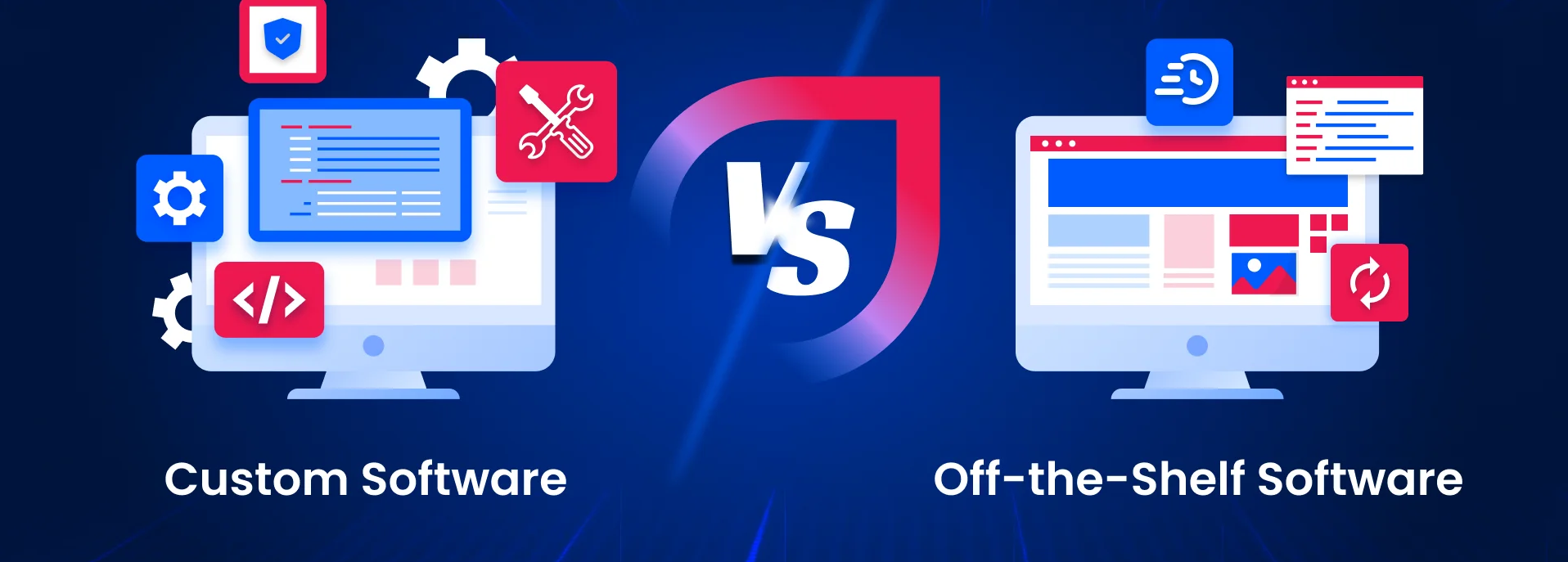
  • Why Off-the-Shelf Software Fails Growing Businesses (And Why Custom SaaS is the Solution)

    Why Off-the-Shelf Software Fails Growing Businesses (And Why Custom SaaS is the Solution)

    You signed up for a popular project management tool. It looked great in the demo. Three months later, your operations team is juggling three separate platforms, your finance team is manually copying data into spreadsheets every morning, and your CTO is asking why you’re paying five-figure annual subscriptions for tools that still don’t talk to each other.

    Sound familiar?

    This is the off-the-shelf software trap — and it catches thousands of growing businesses every year. The solution isn’t another app. It’s software built specifically around how your business actually operates.


    The Hidden Cost of “Good Enough” Software

    When a business is small, generic software works just fine. You need a CRM, you pick Salesforce. You need accounting, you grab QuickBooks. You need HR management, you install BambooHR. The problem isn’t the tools themselves — they’re well-built products for their target markets.

    The problem starts the moment your business outgrows the assumptions baked into those tools.

    Off-the-shelf software is built for the average business. Yours isn’t average. Your workflows are specific, your compliance requirements are unique, your customer journeys don’t fit neatly into pre-built templates.

    What you’re left with is software that forces your business to bend to its logic — instead of the other way around.

    Where the Cracks Start to Show

    Growing businesses typically hit the same breaking points with generic software:

    • Integration debt: Five tools, zero native communication between them. Your team wastes hours every week on manual data transfers that should be automated.
    • Rigid workflows: You can’t change core processes because the software wasn’t designed to be changed. Workarounds become standard operating procedure.
    • Per-seat pricing that bleeds you dry: As your team grows, your subscription costs scale exponentially. You’re paying for users who barely touch the platform.
    • Compliance mismatches: Industry-specific regulations in your sector often require features or data handling practices that off-the-shelf tools simply don’t support out of the box.
    • No competitive advantage: Every competitor in your space has access to the exact same tool, with the exact same features. Generic software builds generic operations.

    What Custom SaaS Actually Means

    Custom SaaS solutions are web-based software platforms designed and engineered specifically for your business. Unlike packaged software, a custom SaaS product is built around your real processes, your real team, and your actual growth plan.

    It’s not a luxury reserved for Fortune 500 companies. Thanks to modern software engineering practices and cloud infrastructure, businesses of all sizes now have access to affordable, scalable custom software development — including right here in Pakistan.

    The Architecture Difference

    A well-engineered custom SaaS product is built on three principles:

    1. Modular Design The system is broken into independent components. Your inventory module doesn’t need to know how your invoicing module works internally. This makes the system easier to maintain, upgrade, and extend as your needs evolve.

    2. API-First Thinking Every function in the system exposes a clean API. This means your custom platform can connect with any third-party tool you already use — whether that’s a payment gateway, an ERP system, or a logistics provider’s tracking dashboard.

    3. Role-Based Access and Security Generic software often has bloated permission systems that don’t match real organizational hierarchies. Custom software gives your security team the exact control structure your business needs — nothing more, nothing less.


    Five Business Problems Custom SaaS Solves That Off-the-Shelf Can’t

    1. Fragmented Operations Across Multiple Platforms

    A retail chain managing 12 branches was running separate software for inventory, sales, HR, and customer loyalty. Reports took two days to compile manually. After switching to a custom-built operations platform developed by TechShield, all four functions were unified under a single dashboard. Reports that took 48 hours now run in under 60 seconds.

    When your business automation software is designed around your actual data model, this kind of consolidation isn’t just possible — it’s straightforward.

    2. Processes That No Off-the-Shelf Tool Understands

    Some industries have workflows that don’t exist in any product catalog. A logistics company with multi-tier pricing rules based on weight, distance, and cargo type will never find a generic tool that handles their quoting process accurately. A legal firm with custom matter management requirements will spend years fighting against whatever CRM they’re forced into.

    Custom SaaS development gives you software that speaks your business language — not the other way around.

    3. Scaling Without Scaling Costs Proportionally

    The per-seat pricing model of most SaaS tools becomes punishing at scale. When you grow from 50 to 500 employees, your software costs can multiply by 10x even if the software itself isn’t doing 10x more work.

    Custom software built on cloud infrastructure scales on actual usage — not on headcount. You pay for compute and storage, not for every new hire.

    4. Competitive Differentiation at the Product Level

    Here’s a question worth asking your leadership team: what exactly is stopping your main competitor from using the exact same software stack you’re running today?

    The answer, in most cases, is nothing.

    Companies that invest in custom software development Pakistan and elsewhere use their software as a strategic differentiator. Their operations are faster, their customer experience is tighter, and their data gives them insights that their competitors — running the same off-the-shelf tools — simply don’t have.

    5. Data Ownership and Security Compliance

    When your business data lives in a vendor’s cloud, you’re subject to their security practices, their data policies, and their uptime decisions. For businesses in regulated industries — healthcare, finance, legal services — this is a serious compliance risk.

    Custom SaaS solutions give you full control over where your data lives, how it’s encrypted, who can access it, and how it’s backed up. This is especially critical for businesses operating in Pakistan and the broader South Asian market, where data sovereignty and compliance requirements are increasingly tightening.


    What the Custom Development Process Actually Looks Like

    One reason businesses avoid custom software is the fear of the unknown — long timelines, ballooning budgets, and a finished product that doesn’t match the original vision.

    That fear comes from working with the wrong engineering partner. When you work with a firm like TechShield, the process is structured, transparent, and milestone-driven.

    Phase 1: Discovery and Architecture Planning

    This is where most projects succeed or fail. A thorough discovery phase maps your actual business workflows, identifies integration requirements, and defines the technical architecture before a single line of code is written.

    Skip this phase and you’ll spend the next six months building the wrong thing.

    Phase 2: Iterative Development with Regular Releases

    Modern software engineering in Lahore and globally doesn’t mean a six-month blackout followed by a big reveal. Agile development means you’re seeing working features in two-week cycles, giving you the ability to course-correct early and often.

    Phase 3: Integration and QA

    Your custom platform needs to connect cleanly with your existing systems — accounting software, payment processors, logistics APIs, or government portals. Rigorous integration testing ensures nothing breaks in production.

    Phase 4: Deployment, Monitoring, and Ongoing Support

    Going live is not the finish line. A reliable engineering partner continues to monitor performance, deploy updates, and respond to your evolving needs. Software that isn’t maintained becomes a liability — not an asset.


    The ROI Case for Custom SaaS Solutions

    The upfront investment in custom software development tends to raise eyebrows. But the comparison needs to be made honestly.

    Consider a mid-size business paying for five SaaS subscriptions totaling PKR 2.5 million annually, spending 20+ hours per week in manual data management, and still not getting the reporting and automation they actually need. Over three years, that’s PKR 7.5 million in subscriptions alone — plus the cost of the inefficiency.

    A custom platform built once, owned outright, and tailored to their exact workflows often costs less over the same three-year window — while delivering measurably better outcomes.

    Actionable Takeaways You Can Apply Right Now

    • Audit your current software stack. Count how many tools your team uses daily. If it’s more than four, you almost certainly have integration problems you’re not fully measuring.
    • Quantify your manual work. Ask your team how many hours per week are spent copying data between systems, preparing reports, or working around software limitations. That number has a dollar value.
    • Identify your three biggest workflow pain points. The processes that cause the most friction for your team are exactly where custom software delivers the highest ROI.
    • Ask about data ownership. Review the terms of your current SaaS agreements. Understand where your business data is stored, who owns it, and what happens to it if you cancel.
    • Stop adding tools and start consolidating. The instinct when a tool doesn’t quite work is to find a supplementary tool. That instinct is making the problem worse. Consolidation through custom software is a more sustainable path.
    • Evaluate engineering partners by their discovery process. Any firm that jumps straight to quoting without a thorough requirements and architecture phase is a risk. The best custom software development Pakistan firms invest heavily in getting the architecture right before writing code.

    Why Businesses Choose TechShield for Custom SaaS Development

    TechShield is a Lahore-based global digital engineering and cybersecurity firm that has delivered custom SaaS solutions for businesses across retail, logistics, healthcare, finance, and professional services.

    Our engineering teams combine deep software architecture expertise with cybersecurity-first thinking — meaning every platform we build is designed to be scalable, maintainable, and secure from day one.

    We don’t sell you a template and call it custom. We build from the ground up, designed for your exact requirements, your team, and your growth plan.

    Our clients in Pakistan and across international markets consistently report the same outcome after switching from off-the-shelf to custom: faster operations, lower total software costs, and infrastructure that actually grows with the business instead of limiting it.


    Ready to Build Software That Works the Way Your Business Works?

    If your current software stack is holding your growth back, the solution isn’t another generic subscription. It’s a platform built around your actual business.

    TechShield offers a free infrastructure and software audit for businesses evaluating custom SaaS development. We’ll map your current systems, identify your biggest technical bottlenecks, and give you a clear picture of what a custom solution would look like for your specific context — with no obligation.

    Get your free audit at techshield.com.pk

    Stop fitting your business around your software. Start building software that fits your business.


    TechShield | Software Engineering Lahore | Custom Software Development Pakistan | Business Automation Software | Cybersecurity & Digital Engineering

  • Top 5 Cybersecurity Tips for Businesses in 2026

    Top 5 Cybersecurity Tips for Businesses in 2026

    In 2026, cyberattacks have become more sophisticated than ever. With the rise of AI-driven phishing and advanced ransomware, global businesses must take proactive steps to secure their digital assets. Here are the top 5 cybersecurity tips that every business should implement today to protect their data.

    1. Adopt a Zero-Trust Architecture
      The old philosophy of “trust but verify” is dead. In a Zero-Trust model, we assume that threats exist both inside and outside the network. No user or device is trusted by default, and continuous verification is required for access.
    2. Conduct Regular VAPT Audits
      Vulnerability Assessment and Penetration Testing (VAPT) is essential to identify weaknesses before hackers do. Regular security audits help you find security gaps in your code, servers, and network infrastructure before they can be exploited.
    3. Enable Robust Multi-Factor Authentication (MFA)
      Simple passwords are no longer enough to protect sensitive business data. Implementing MFA adds an extra layer of protection, requiring users to verify their identity through an app or hardware token.
    4. Employee Cybersecurity Training
      Human error remains one of the leading causes of security breaches. Regular training ensures that your remote and on-site teams can easily recognize sophisticated phishing emails and social engineering tactics.
    5. Implement Continuous Monitoring & Backups
      Having automated, secure, and off-site cloud backups ensures that even in the case of an attack, your business can recover quickly. Couple this with 24/7 SOC monitoring to catch threats before they reach your network.

    Conclusion:
    Don’t wait for a breach to happen. Contact TechShield Solutions today for a comprehensive security and infrastructure audit to protect your business’s future.